




Welcome to JCOG
As of April 2025, I, Yukihide Kanemitsu of the National Cancer Center Hospital, have been appointed as the sixth Chair of the Japan Clinical Oncology Group (JCOG), following in the footsteps of my esteemed predecessors: Drs. Masanori Shimoyama, Nagahiro Saijo, Tomohide Tamura, Kensei Tobinai, and Yuichiro Ohe. It is an exceptional honor and privilege for me to assume leadership of this distinguished organization, and I feel a profound sense of responsibility as I undertake this role.
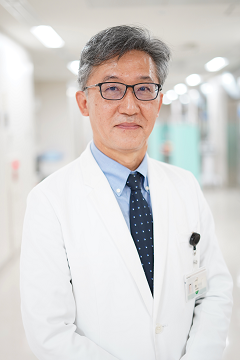
Yukihide Kanemitsu, JCOG Chair
JCOG traces its origins to a national research initiative funded by the former Ministry of Health and Welfare in 1978, titled "Research on Multidisciplinary Treatment of Cancer" .In 1990, under the leadership of Dr. Masanori Shimoyama, the group was formally named the Japan Clinical Oncology Group (JCOG), and in 1991, its Statistical Center (now the Data Center) was established.
Since then, JCOG has evolved into Japan’s largest multi-institutional cooperative clinical trials group. Its structure consists of disease-specific study groups and their affiliated institutions, a central coordinating mechanism including the Data Center and Operations Office, and a series of oversight committees. Through the evaluation of novel treatment modalities and strategies, JCOG has consistently aimed to improve clinical outcomes for patients with cancer.
Building on these achievements, it is imperative that we address several emerging trends shaping the future of oncology:
- ・Advancement of personalized medicine:As treatment increasingly relies on the genetic and biological characteristics of
each patient’s tumor, JCOG’s data will serve as a key source of evidence for guiding optimal, individualized treatment decisions. - ・Development of novel therapies:The growing prominence of immunotherapies and targeted therapies calls for rigorous
clinical validation through JCOG trials, thereby facilitating their broad adoption into clinical practice. - ・Focus on early detection and prevention:Research in this area will contribute to the development of innovative diagnostic
tools, ultimately enhancing cancer survival rates. - ・Progress in data-driven medicine:Advances in big data analytics and artificial intelligence are enabling more precise
treatment selection and outcome prediction; the rich data generated by JCOG will provide an invaluable foundation for such
research. - ・Patient engagement and empowerment:By promoting patient and public involvement (PPI) in clinical research and
development, we will foster greater patient participation in care decisions and enhance education and information
dissemination, thereby empowering patients throughout their treatment journey.
About JCOG
JCOG has made particularly significant contributions in clinical research on surgery, multimodal treatments that integrate surgery, radiotherapy, and pharmacotherapy, and studies targeting elderly cancer patients. These are critically important clinical studies that can only be conducted through public research funding.
At the same time, we recognize the necessity of responding flexibly and rapidly to the evolving landscape of cancer care. To this end, we will strengthen our infrastructure for conducting investigator-initiated clinical trials using drugs unapproved in Japan and trials conducted under Japan’s Advanced Medical Care Program. We will also pursue further efficiency and flexibility in protocol development and review processes to enable timely initiation of studies addressing emerging clinical priorities.
Moreover, we will actively pursue collaborative studies with domestic and international clinical trial groups to promote data sharing and resource optimization. While mindful of competition with other groups and industry-sponsored trials, we will continue to clarify and enhance the unique value and competitiveness of JCOG’s research.
Additionally, we will work to reduce disparities in activity levels across our 16 study groups by providing targeted support and fostering stronger collaboration. Through these efforts, we aim to further elevate the overall quality of JCOG’s research and deliver the best possible treatment options to patients with cancer.
It is my steadfast goal to further advance the proud tradition of JCOG. Together, with your continued support and collaboration, we will strive to open new frontiers in cancer care. I sincerely hope that our efforts will bring hope and light to patients with cancer and their families.